Grow. Cook. Eat
Eastern Bay Kai Security
Grow. Cook. Eat
Eastern Bay Kai Security

I started testing whether homemade sourdough bread could replace Vogels in our household just before Christmas. I’ve always wanted to eat more homemade and locally grown food but in terms of bread specifically, the trigger was glyphosate residues in commercial bread, the use of predominantly Australian wheat in supermarket flour, and the launch of the NZ Grain Mark. I wanted to avoid glyphosate, support NZ growers, and see if homemade bread could fit into a regular routine — not as a weekend hobby, but as part of daily life. If you want to read more about why I’m considering these changes, and what recipe I started with, you can see my original post here.
The plan was to document this after four weeks. Then the holidays happened, we moved house, and life got in the way. Four months later, I’m finally writing this up.
The short version: I’m continuing. The bread-making routine works, it’s cheaper than Vogels, and the household loves the bread. But it is not a straight swap and as with most things, there are challenges to work through.
Here’s what actually happened.
The first challenge was finding a rhythm that would fit around work and daily life. I started with a daytime routine in the middle of summer: feed the starter in the morning, mix the dough at lunchtime, shape it before bed and bake the next day. It worked well enough, I work from home half the week so planned bread baking around those days.
Then autumn arrived, the weather cooled down, and the routine stopped working the same way. Cooler temperatures meant slower fermentation, and the timing of the bulk fermentation phase in particular wasn’t working the same anymore. Instead of fighting it, I’m switching to longer fermentation in the fridge: still feed in the morning & mix at lunchtime, bulk ferment at room temperature for the afternoon and then in the fridge overnight, then shape and bake the next day. It lengthens the process and I’m still working on other timing tweaks that will work for winter but at this stage it isn’t a game changer.
The key seems to be using the fridge as a timing buffer. If the dough wasn’t ready when I needed it to be, I could stick it in the fridge and deal with it later. Suddenly I had options instead of constraints. The fridge gave me control over the schedule instead of being at the mercy of “the dough is ready NOW, deal with it.”There was a learning curve. I needed a fairly flexible schedule initially to figure out when I could pause the process and when I couldn’t. I needed to learn what the dough looked and felt like at different stages.
So the routine is temperature-sensitive. What works in late summer doesn’t work in autumn. I expect it’ll shift again as winter arrives. That’s not a failure, just a variable to manage. Seasonal adaptation is part of the reality.
Bread-making fits into my life now. That’s a win.
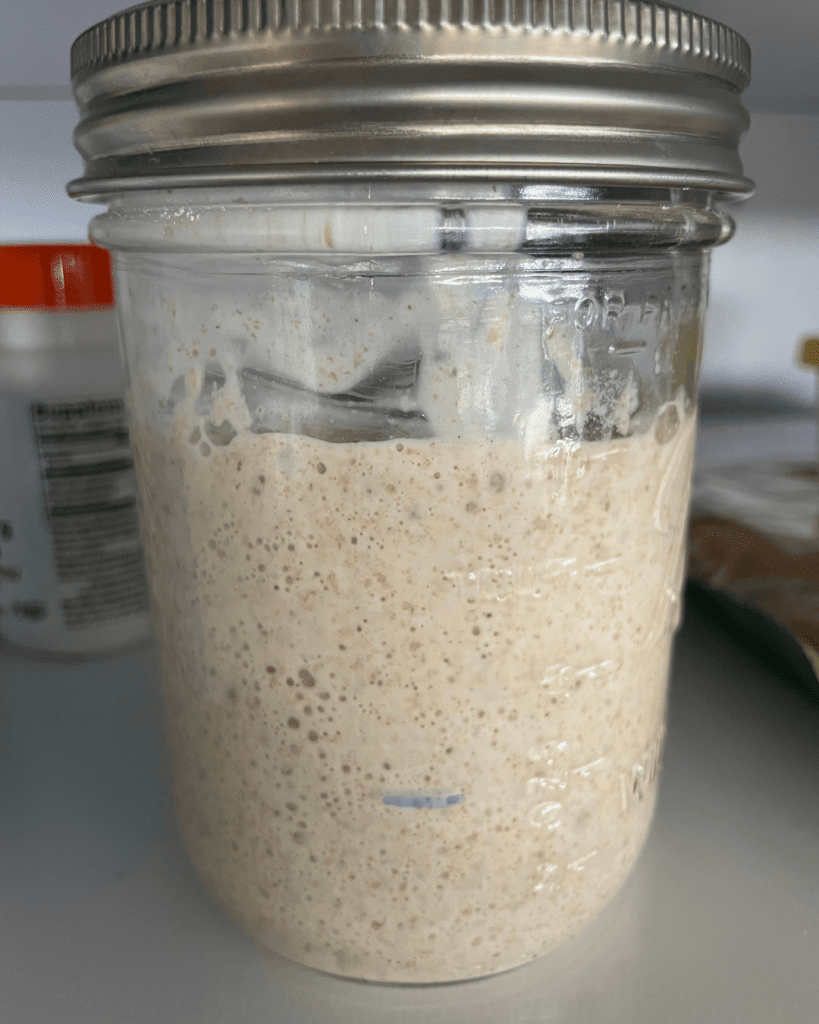
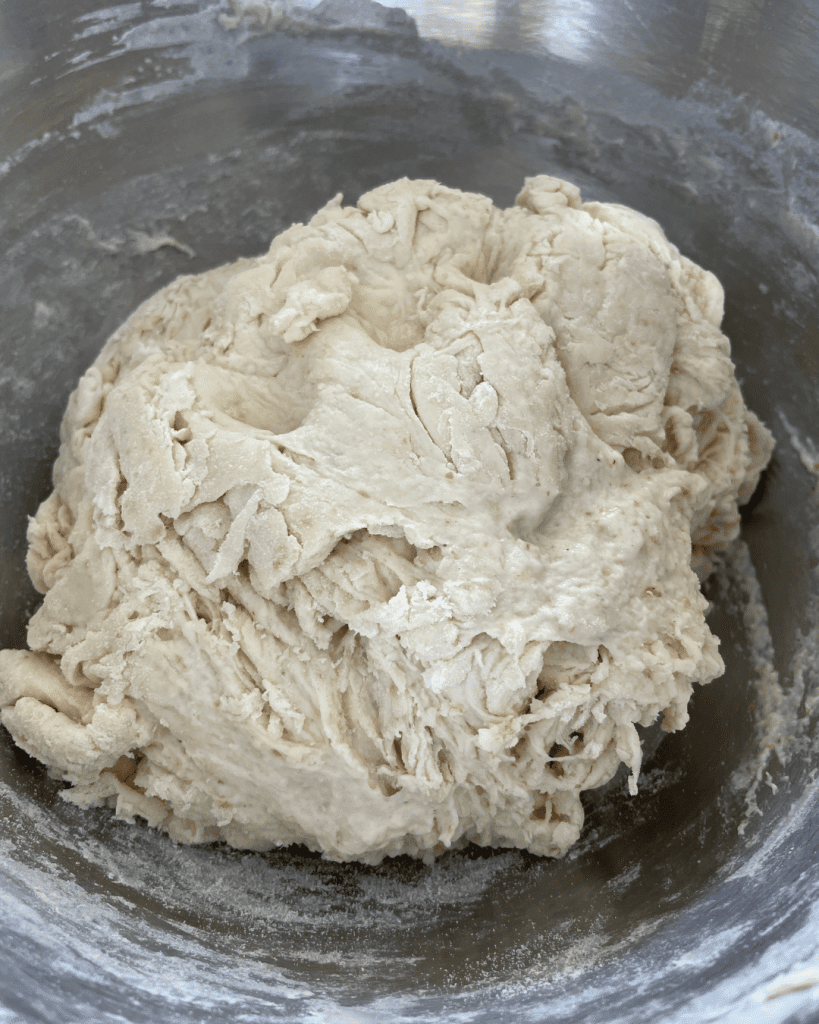
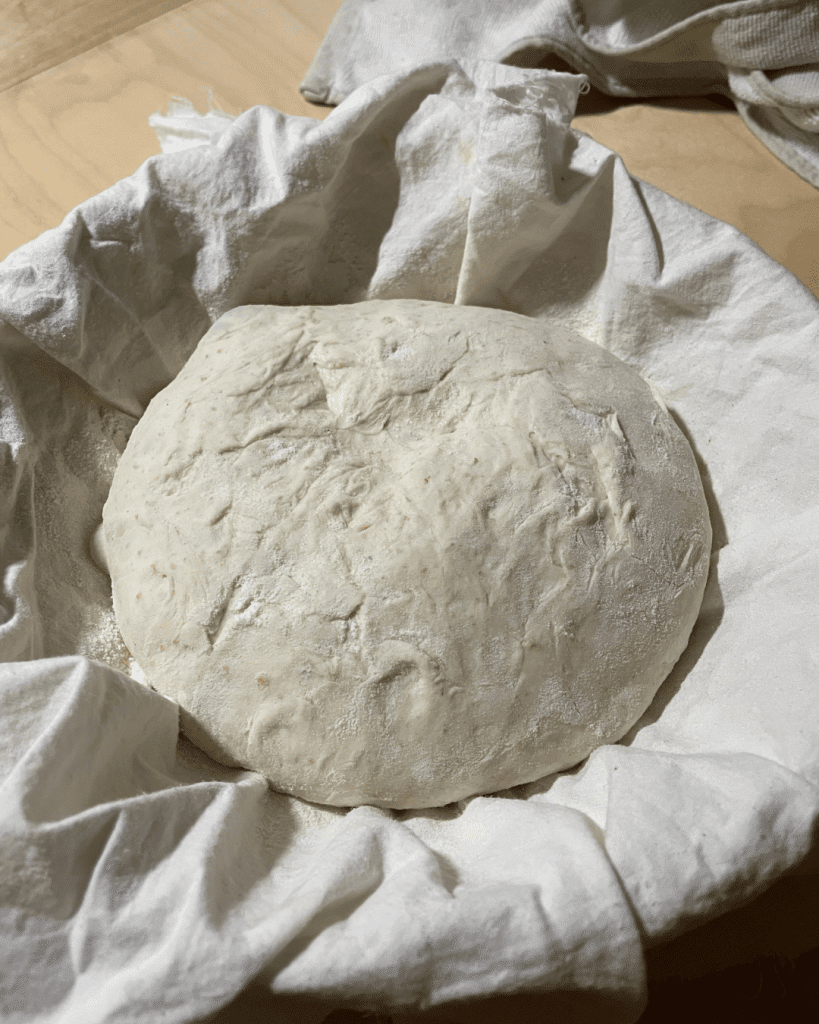
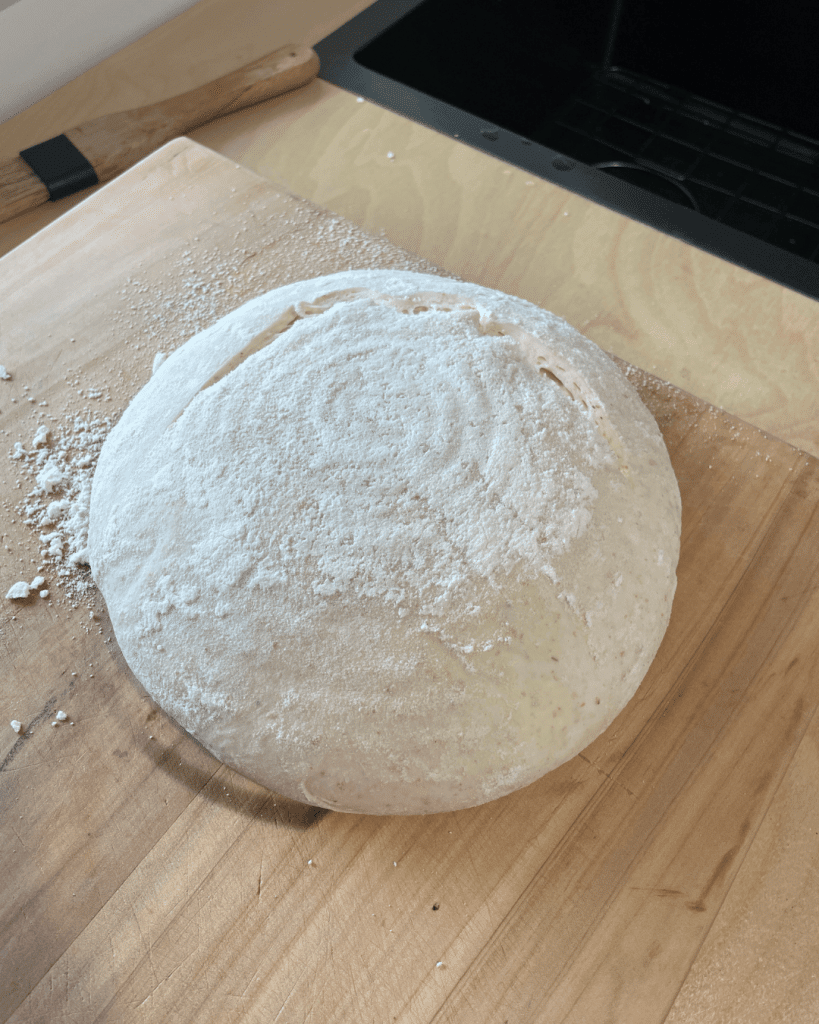
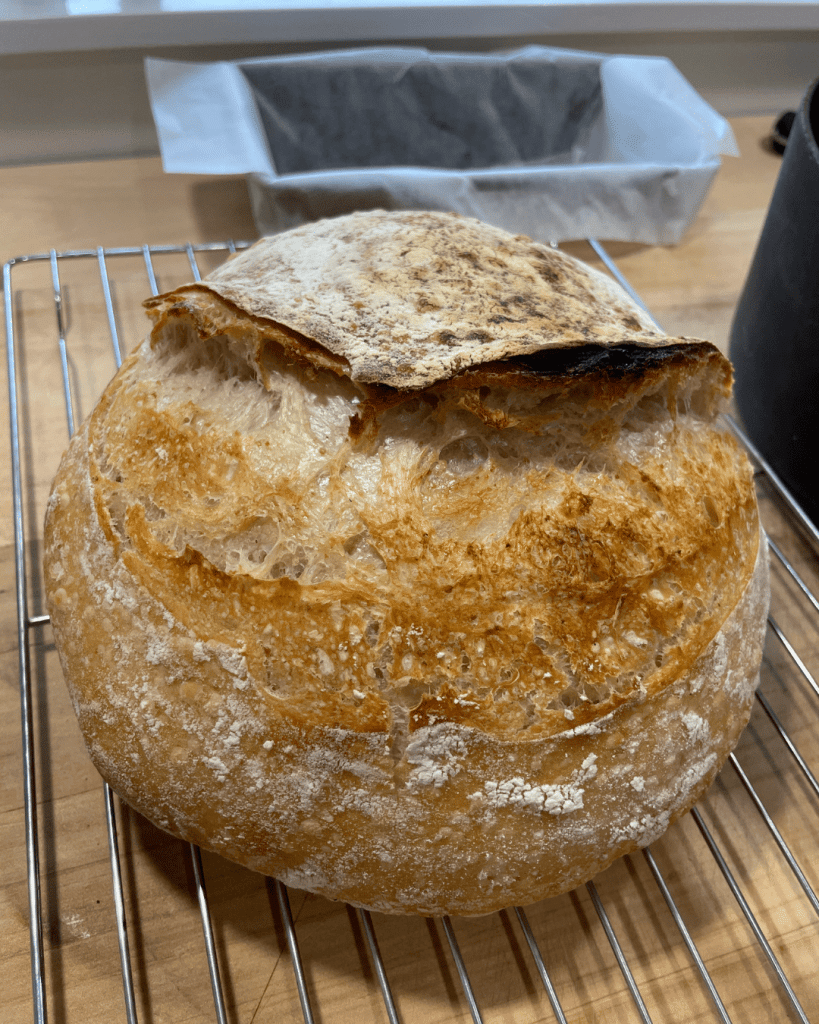
I wanted to bake bread with NZ-grown organic flour. The reality turned out to be more complicated than just walking into a shop and buying it.
My local health food shop (Whakatane Organics) stocks organic flour, but the options are: Australian organic white at $5.50/kg, or NZ organic whole wheat at $7/kg. No NZ-grown organic white flour locally available. The local Bin Inn has Australian organic white as well, but nothing obviously NZ-grown.
So there’s a choice: Australian organic (glyphosate-free but not NZ-grown) or NZ organic whole wheat (glyphosate-free and supporting NZ growers, but whole wheat only). I can’t get both qualities in white flour without bulk-buying online, which adds shipping costs.
During the four-month testing period, I didn’t actually use either of those options. I started with cheap supermarket high grade flour while I was learning. It was what we already had and I didn’t want to waste expensive organic flour on the learning curve. It made sense to use what we already had. I did buy some organic, NZ grown Spelt flour as an addition but it wasn’t the main component of each loaf.
Later, we were given several kilos of flour through a food rescue source — a mix of spelt and bakers flour. I have no idea where it came from or whether it was organic or NZ-grown, but it was free and it was being saved from going to waste. So I used it. While this did not fit with my initial buying plan, it does fit with my overall food system morals.
Now that the routine is established, I’ll be switching to the organic options from Whakatane Organics. Going forward, I’ll be using a combination of Australian organic white, NZ organic whole wheat and NZ organic spelt. It’s a compromise — not fully NZ-grown, but meeting the glyphosate-avoidance goal and partially supporting NZ growers through the whole wheat and spelt components.
I’d still like to find NZ organic white flour, possibly through bulk buying. But for now, this is what’s accessible locally without prohibitive shipping costs and to be honest, spelt is proving to be a good option so perhaps I’ll shift to that instead of white wheat flour.
Sourcing is an ongoing negotiation, not a solved problem.
This is where honesty gets important.
During the testing period, I started with cheap supermarket high grade flour at $1.53/kg while I learned the routine. I didn’t want to waste expensive organic flour on mistakes and failed loaves. Cost per loaf with cheap flour was $0.77 (500g per loaf). Later I switched to food rescue flour — a mix of spelt and bakers flour that was free. That made the cost $0 per loaf.
So for most of the four months, my bread cost between $0-$0.77 per loaf compared to Vogels at $4-$4.70. That made it dramatically cheaper. But it didn’t reflect the true cost of meeting my stated goals around organic and NZ-grown flour.
Going forward, using organic flour from Whakatane Organics, the cost changes:
– Australian organic white: $5.50/kg = $2.75 per loaf
– NZ organic whole wheat: $7/kg = $3.50 per loaf
– Blended cost (depending on ratio): somewhere between $2.75-$3.50 per loaf
Compared to Vogels at $4-$4.70, I’m still saving $0.50-$1.95 per loaf. At 1-2 loaves per week, that’s roughly $25-$200 per year in savings.
So yes, it’s cheaper. But the testing period didn’t evaluate that — I was using cheap or free flour while I figured out if the routine was sustainable. The true cost only applies now that I’m switching to organic.
The NZ organic whole wheat costs $1.50/kg more than the Australian organic white. That’s $0.75 more per loaf, or about $40-$75 per year if I’m baking 1-2 times a week. That’s the price of supporting NZ growers. It’s a modest premium, and I’m still saving money compared to Vogels either way, so it feels worth it.
Each loaf uses about 500g of flour (including feeding the sourdough starter), 10g of salt, and water. No yeast cost — the starter is self-perpetuating and I don’t generate discard. Ingredients are simple and outside of the flour, the costs are negligible. We also started out on solar power and intend to be back on solar in the near future so even power costs for baking aren’t significant.
Time per loaf breaks down like this:
– Feed the starter: 5 minutes
– Mix the dough: 15 minutes
– Stretch and fold over 1.5 hours: 15 minutes total (spread across several folds, with passive waiting in between)
– Shape the loaf: 10 minutes
– Load into the oven: 5 minutes
– Bake: 40 minutes (passive)
Total active time: about 50 minutes per loaf.
Total passive time (waiting, baking): about 2 hours.
I’m baking 1-2 times per week, so that’s 50-100 minutes of active time per week. The passive time happens while I’m doing other things — working, cooking dinner, whatever.
Is that sustainable? For me, yes. The fridge flexibility helps manage the timing, but it doesn’t eliminate the time required. Time is a real cost. I’ve decided it’s worth it, but it’s not nothing. For me it fills bits of time that I don’t really miss. A few minutes to feed the starter while the jug is boiling in the morning, shape the dough before sitting down to relax in the evening. The stretch and fold time would be the most inconvenient as it requires regular presence across 90 minutes but it fits ok between work tasks or around my lunch break.
This is the partial resolution.
I expected homemade bread to be a direct replacement for Vogels toast at breakfast. That’s not quite what happened.
The bread is popular. Everyone in the household loves it. It goes in my daughter’s lunchbox. It gets eaten fresh for breakfast some days. But we’re still buying Vogels for her toast.
The problem is a very individual one. I’ve been making round loaves, which produce slices for that aren’t the regular rectangular shape. The texture is also different — softer crumb rather than the dense, grainy texture of Vogels. It’s good bread, just different and everyone who has kids knows that sometimes those differences can be make or break.
The household enjoys it, but it’s serving different uses than I originally intended. It’s meal bread, lunchbox bread, fresh breakfast bread — but not breakfast toast bread. That role still belongs to Vogels.
So homemade bread hasn’t replaced Vogels entirely. They coexist. Each has its place.
I’d considered trying a rectangular loaf shape for better toast slices, but our small oven won’t fit a loaf tin. That’s an equipment constraint I can’t easily solve. Adding wholegrains might help with the texture gap, and I’ll be experimenting with that as I shift to the organic flour blend. But I’m not counting on it closing the gap completely.
The honest answer is: homemade bread has reduced our Vogels consumption, but not eliminated it. That’s worth acknowledging.
Here’s how the experiment measured up against the original goals:
YES. Routine established, seasonal adaptation works, fridge flexibility solved timing constraints. This is sustainable.
YES. Going forward with organic flour, cost per loaf will be $2.75-$3.50 compared to Vogels at $4-$4.70. Still saving money while meeting glyphosate-avoidance and partially meeting NZ-grown goals. But noting that the experiment itself used cheaper flour, so true cost only applies now.
PARTIALLY. Homemade bread goes in lunchboxes and gets eaten fresh for breakfast. It’s reduced Vogels consumption but hasn’t eliminated it — we still buy Vogels for toast. They coexist for different uses.
YES, for me, right now. Avoiding glyphosate (via organic flour), supporting NZ growers (via whole wheat component), simpler ingredients, household enjoys the bread. Time investment is real but manageable with fridge flexibility. Usage gap exists but feels solvable with modifications.
Overall: 3 out of 4 criteria met (one fully, two partially). Enough to justify continuing.
Some genuine wins worth acknowledging:
– Routine establishment, even with seasonal shifts
– Fridge as timing buffer — this will be essential through the changing seasons
– Bread quality — household loves it
– Avoiding glyphosate through organic flour
– Supporting NZ growers through whole wheat component
– Ingredient simplicity: flour, water, salt, starter vs the longer ingredient list on Vogels
– Adaptability: spelt experiment, temperature adjustments, pragmatic sourcing
– Cost savings while meeting ingredient/sourcing goals
These are real. The experiment worked in most of the ways that matter.
The friction points that might stop someone else (or me, under different circumstances):
– Usage gap: reduces Vogels consumption but doesn’t eliminate it (shape/texture differences, equipment constraints)
– Learning curve: initial timing uncertainty required a flexible schedule
– Seasonal routine shifts: requires ongoing adaptation
– Cost data incomplete during testing: cheap and free flour made true comparison theoretical
– NZ organic white flour not locally available: requires bulk buying or accepting whole wheat
– Time investment is real, even if manageable
– Sourcing is an ongoing negotiation, not a one-time decision
– Small oven limits loaf shape options (rectangular tin won’t fit)
Not deal breakers, just honest friction.
I’m continuing to make bread regularly. The routine is established and sustainable. Vogels hasn’t been eliminated, but homemade bread has found its place in the household.
Why continue? The benefits outweigh the friction. The household enjoys the bread. Avoiding glyphosate matters to me. Supporting NZ growers (through the whole wheat component) matters to me. The routine works. And the cost savings are real once I factor in organic flour.
What’s changing in the short to medium term:
Flour: Switching to a blend of Australian organic white and NZ organic whole wheat from Whakatane Organics or Bin Inn. This meets the glyphosate-avoidance goal and partially supports NZ growers.
Texture: Adding wholegrains to see if it closes the gap with Vogels texture. Not expecting it to eliminate Vogels entirely, but might reduce consumption further.
Beyond that, I’m not planning major changes to the bread routine. The rectangular loaf experiment isn’t happening yet as our small oven won’t fit a loaf tin. Other tweaks might happen in the long term (bulk-buying NZ organic white flour, more intentional spelt use, possibly home milling), but they’re not a priority right now.
Instead, my focus and energy will shift to other food items. The bread experiment proved that this approach works: test the routine first with cheap ingredients, establish sustainability, then upgrade to ingredients that meet your values. I’ll be repeating similar experiments with yoghurt and oat milk next.
Bread-making will continue in the background, stable and ongoing, while I explore other parts of the local and from-scratch project.
If you’re also rethinking your bread choices, I’d be interested to hear what you’re weighing up. And if you use NZ grown flour in your baking, who are your favourite suppliers?