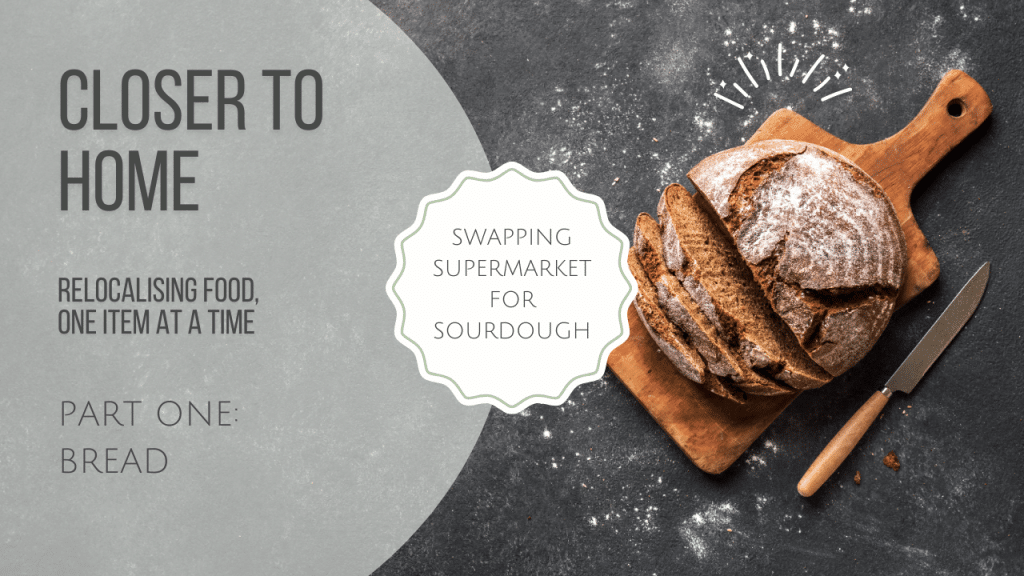
I’ve been buying Vogels wholegrain bread for years. Toast for breakfast mostly, or toasted sandwiches, it is reliable and easy, plus it is wholegrain so it’s a healthy option right?
For the most part, sure, bread is a fairly healthy staple. Grains have been at the ‘eat most’ end of the food pyramid for quite some time and bread has been around in most cultures for centuries. But is modern supermarket bread the same as what was produced all those years ago? Anyone who has read Omnivore’s Dilemma by Michael Pollen knows that modern foods can end up nothing like their historic counterparts. Processes have changed, so have plant breeds, additives, preservatives, even the mineral content of our soils. We now also have glyphosate residues appearing in wheat and therefore flour, plus international supply chains rather than localised supply.
When you start looking into how modern bread is made, where the flour comes from, and what gets added along the way, there are some genuine questions worth asking. Is the bread we buy at the supermarket really the best option for our health, and our food systems, and if not what other options do we have?
Covid lockdowns uncovered a new generation of sourdough bakers and there is no doubt that a home baked loaf of bread looks amazing. So I’m spending four weeks testing whether homemade bread can actually replace Vogels in our household — not as a weekend hobby, but as part of a regular routine.
What Bugs Me About Supermarket Bread?
Plastic waste
Bread bags. So. Many. Plastic. Bread bags. We try to cut back on packaging where we can. We don’t use glad wrap, we have reusable coffee cups, we reuse plastic bags where we can. But in the end there are only so many plastic bags that one household can utilise and eventually they do all end up in landfill. By reducing the number of loaves we buy, we reduce the number of plastic bags and that is a win in my book.
the glyphosate issue
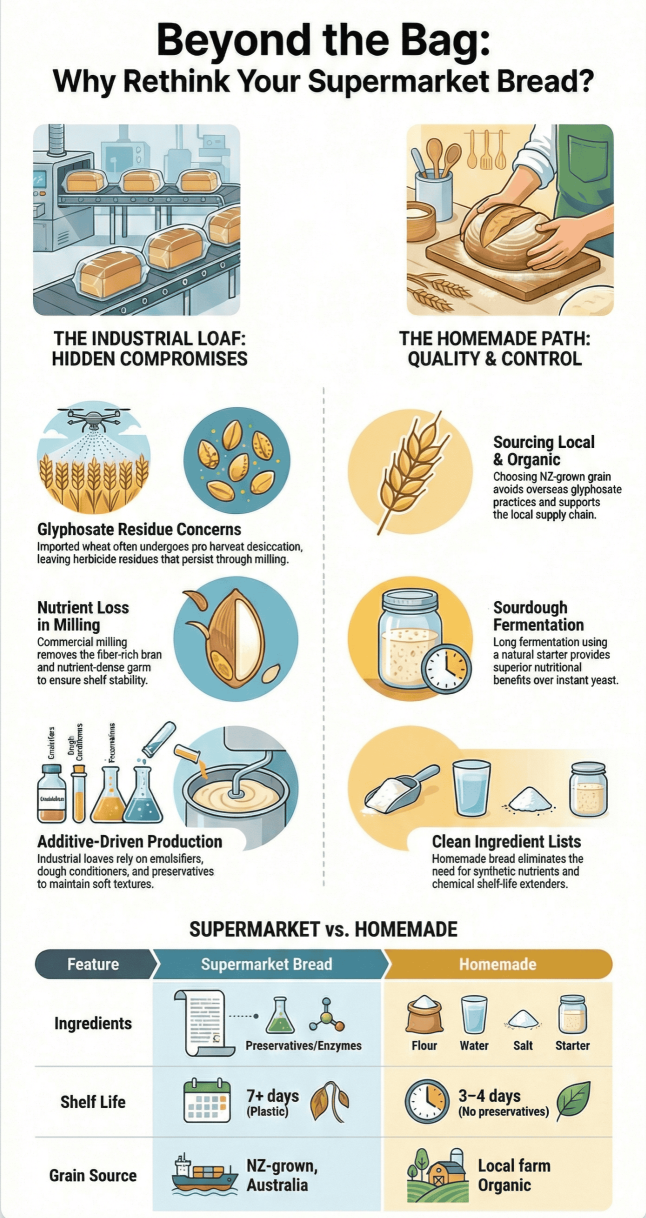
Glyphosate is a herbicide, most commonly sold as Roundup. It’s used widely in agriculture, but the bit that’s relevant to bread is how it’s used in wheat production. Farmers sometimes apply glyphosate to wheat crops just before harvest — not to kill weeds, but to dry the crop evenly. This practice is called desiccation, and it means glyphosate is being applied intentionally, close to harvest time. While not allowed in NZ, this is allowed overseas and given the heavy reliance on imported wheat there is a significant chance that the wheat used in our flour and bread has been subject to this process.
The residues don’t just disappear. They persist through milling and into the flour, and then into the bread. Recent testing has found measurable glyphosate residues in commercial bread products. The current limit in New Zealand is 0.1mg/kg (although in 2025 an increase to 10mg/kg was proposed and then scrapped) and all loaves that have been tested measure under that limite. But “within safe limits” and “residue-free” are not the same thing, and plenty of people would prefer to avoid it altogether if they can, especially following the recent retraction of studies relating to the safety of glyphosate.
This isn’t about claiming glyphosate is definitively dangerous at the levels found in bread — I’m not qualified to make that call. But I can choose to avoid it where practical, and homemade bread from organic flour is one way to do that.
imported ingredients
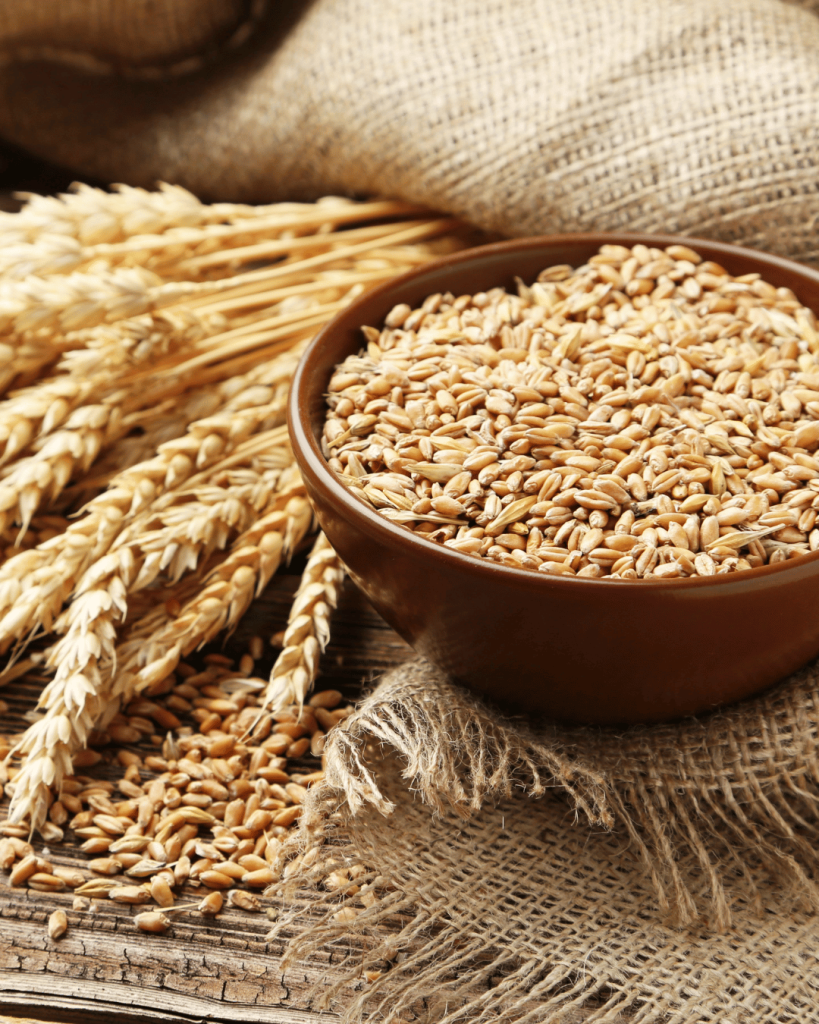
New Zealand used to mill mostly New Zealand-grown wheat. That’s changed over recent decades. Much of the flour in our supermarkets now comes from Australian wheat, or is milled from a blend that includes it. This shift happened for straightforward economic reasons: economies of scale, consistency of supply, interisland transportation cost and consolidation in the milling industry made Australian wheat more cost-effective.
Australian wheat farming practices differ from New Zealand’s, including more widespread use of glyphosate for pre-harvest desiccation. New Zealand wheat is still grown, but it’s less economically dominant than it used to be. Unless your flour is specifically labeled as NZ-grown, it’s likely you’re buying Australian wheat.
There’s been some pushback recently. The NZ Grain Mark (Mark of local quality adorns NZ grains) was launched to identify and promote products made from New Zealand-grown grain. It’s an acknowledgment that the supply chain has shifted, and that some consumers want to support local growers. I’m one of them. I’d rather buy NZ-grown flour if I can find it at a reasonable price, particularly if it’s also organic and avoids the glyphosate issue entirely.
Reduced nutrition
Modern commercial milling uses roller mills to separate wheat into its component parts: the endosperm, the bran, and the germ. White flour is almost entirely endosperm — mostly starch and some protein. The bran and germ are removed.
This isn’t arbitrary. The bran contains fiber, and the germ contains oils, vitamins, and minerals. But those oils in the germ go rancid relatively quickly, which is a problem if you’re trying to produce flour that can sit on a shelf for months. Removing the germ gives you a stable product with a long shelf life. It also gives you a whiter, finer flour that behaves predictably in industrial baking.
“Enriched” flour has synthetic nutrients added back after the natural ones are removed. Wholemeal or wholegrain commercial flour often recombines the components, adding the bran back in, but even then the germ has still been removed along with the nutrition it contains.
Home milling is different. You grind the whole grain fresh, keeping all the components intact, and the oils are still viable. The nutrients haven’t had time to degrade. The trade-off is that fresh-milled flour has a much shorter shelf life and behaves differently in baking. I’m not planning to mill my own flour yet, but it’s something I’m curious about for the future.
Why Supermarket Bread Is What It Is
Supermarket bread is optimised for shelf life, consistent texture, cost, and mass production. That means preservatives (calcium propionate and sorbic acid are common), emulsifiers, dough conditioners, and enzymes. Some of these are functional — they help with structure and rise. Others are purely about extending shelf life so a loaf can sit in a plastic bag for a week without going stale or mouldy.
Ingredient lists can be long, even for loaves marketed as “wholegrain” or “artisan.” Cost efficiency drives a lot of the choices: cheaper fats, lower-grade flour, additives to compensate for shortcuts in the process.
This isn’t inherently bad. Supermarket bread does a job. It’s a staple for most households. Affordable, available, quick and consistent. But you are trading ingredient simplicity, nutrition and freshness for convenience and shelf life. That trade-off is something I have been questioning for a while and I’m finally in a position to explore other options.
Local Bread From My Kitchen
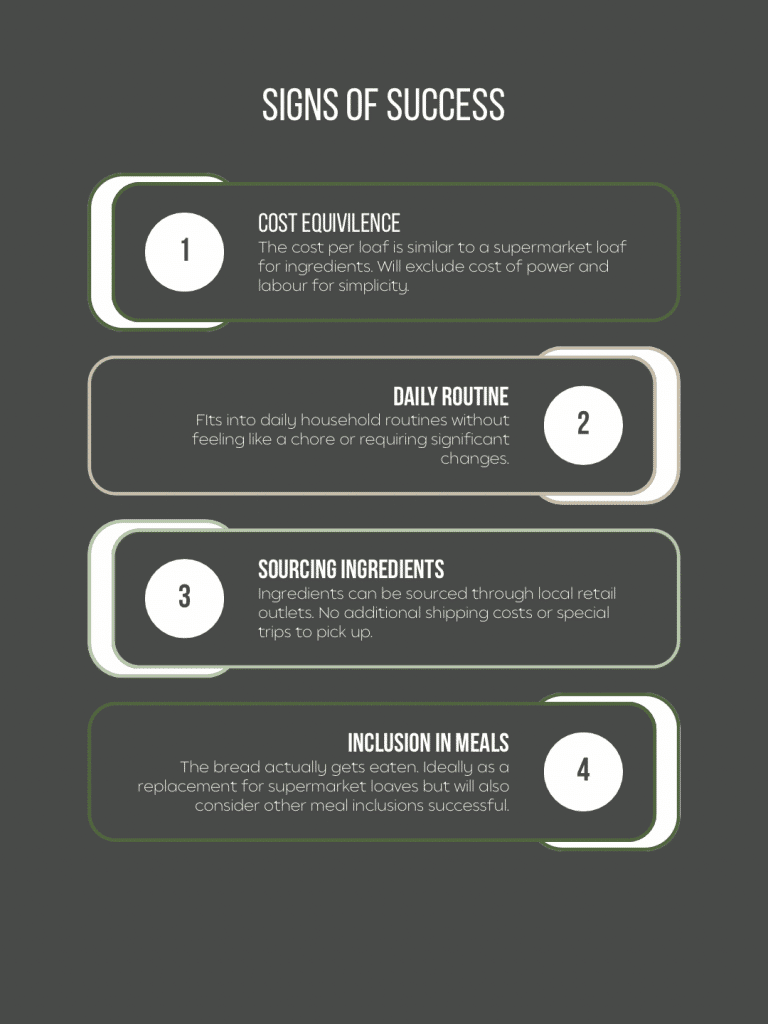
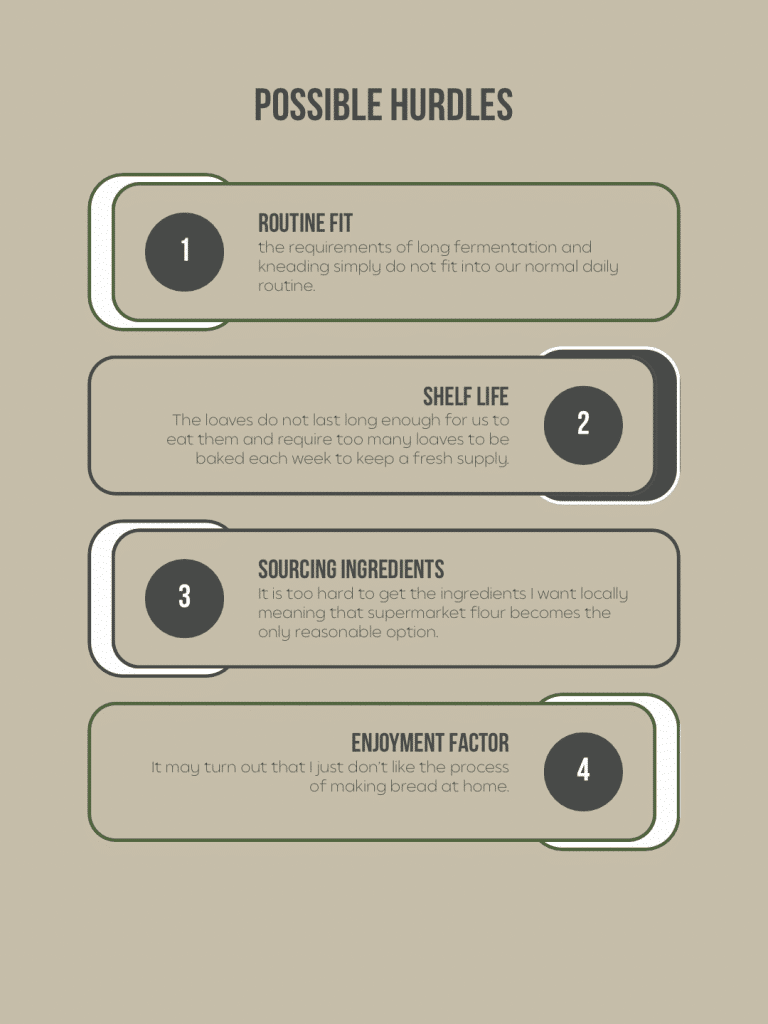
For the next four weeks, I’ll be making bread at home. Initially from supermarket four and then from NZ -grown organic flour if I can find a good source. I’ll be testing whether it can fit into my work schedule and daily routines, comparing the cost to Vogels, and dealing with the shorter shelf life that comes with no preservatives.
I also need to find a reliable source of organic, locally milled flour in a regional area, which may mean costly shipping to get NZ grown, organic flour if there are no existing local stockists.
This is not about perfectly formed sourdough or eliminating supermarket bread completely, but I do want to see whether the swap is achievable and whether we can take some small steps towards more localised, healthier meals.
There are A LOT of sourdough recipes out there. Some more complicated than others, but this is the one I am choosing to use as a start point for my bread baking.
What Local Bread Means To Me
For this project, local means NZ-grown and milled flour. While grain grown just down the road would be amazing, that just isn’t practical at this point in time. Buying NZ-produced, organic flour supports local supply chains and addresses the Australian wheat issue. A big step up from the supermarket status quo without being unrealistic.
I might explore home milling from whole wheat later if it’s cost-effective. The freshness and nutrient benefits are appealing. But for now, I’m buying flour.
From scratch means baking at home from purchased flour using a sourdough starter rather than instant yeast. We’ve made sourdough before and while there are time savings in using instant yeast, the benefits of long fermentation used in sourdough outweigh those in my head.
What Happens Next?
I’ll be testing this for a while to see how baking bread at home works out. Once I’ve gathered enough data, I’ll write a long-form conclusion with an honest evaluation of whether this worked, what it cost, and whether I’m continuing.
If it proves viable, I’ll also put together a practical “how to start” guide for anyone who wants to try it themselves.
This might work. It might not. Either way, I’ll know more than I do now.
If you’re also rethinking your bread choices, I’d be interested to hear what you’re weighing up. And if you’ve found good sources for NZ-grown organic flour, especially in regional areas, let me know.